Kǎrin Hendrickson
- Conductor
- Director of Orchestras, UNM
- The Creativity Conversation
- Orchestra Alchemy
The industry wants to hear you say, “Oh, I’m dynamic. I’m passionate.” Which, YES, I am those things you have to be as a conductor, right?
But actually, what I really hope is — from every minute of the rehearsal, of the interaction offstage in the corridors — that I’m thoughtful. Asked for one word on the podium · conduct(her) podcast, 2023
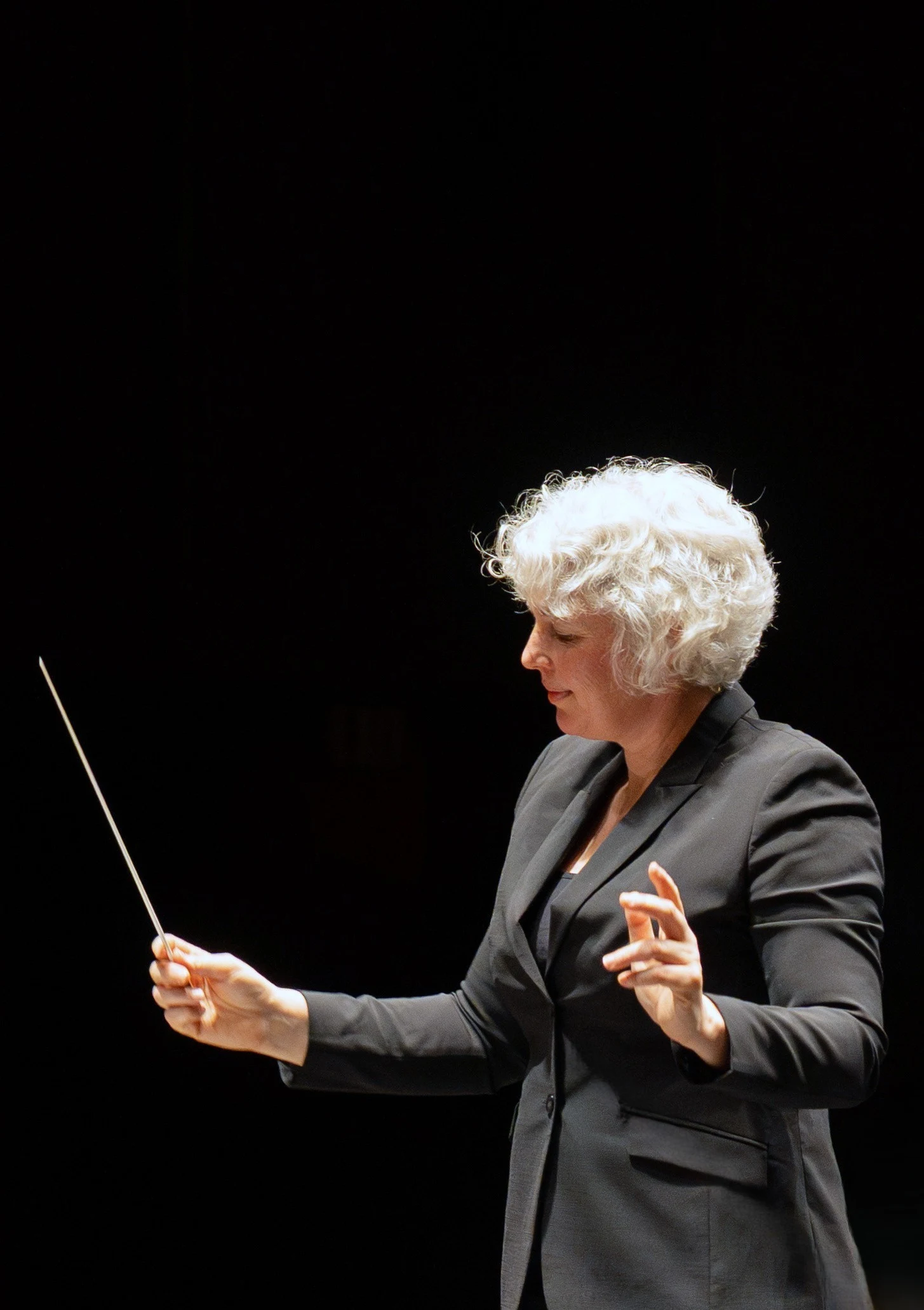
London Symphony Orchestra — one of the kindest, warmest orchestras I have ever conducted.
The orchestra president knocked on my door: “The orchestra’s been on coaches since about three in the morning, so if they’re a little bit grumpy…”
We had the best time.
And I said to him after, “If this is your orchestra when they’re grumpy, I want to see them when they’re in a good mood.”
First rehearsal with the London Symphony Orchestra · conduct(her) podcast, 2023
- 2023, 2024
- 2024
- 2024
- 2023
- 2023
- 2023
- 2023
- 2022
- 2022
- 2022
- 2021
- 2021
- 2021
- 2020
- 2018–20
- 2017–19
- 2018–19
- 2018
- 2017
- 2017
- 2016
- 2016
- 2015
- 2015
- 2015
- 2014
- 2010
- 2008
Asked by a trombonist how to build an ensemble’s trust
One Symphony podcast, 2026 · 1:46
Transcript
I’m not sure you can build it. You have to earn it. And I’m not trying to dodge the question, but I think the language is really important.
When I walk into a room with an ensemble, there’s already an expectation that they will have given me a certain level of trust. That’s their job. It’s my job to deliver for them, it’s their job to give me a certain level of trust. What happens with that certain level? I either earn or I lose.
And I probably can’t specifically tell you how I earn up, how I fill up the bucket with trust, but I think it definitely starts with respect. It also starts with preparation. My best protection is to walk into rehearsal, knowing that I can solve anything for this ensemble, regardless of what they throw at me. And if they throw something at me, I’m sort of like, hmm, that’s curious. That’s not happened before. And this is all in split-second thinking. I wonder what caused that, and the music is going, and it’s also my ability to solve it. If I stop the ensemble, do I make you better?
I really think that’s it. They hand me trust. Do I earn up the rest of it? Because I am prepared. I solve immediately what needs to be solved. If I don’t solve it the first time, do I keep working to solve it? Do I find another avenue?
And also the culture that you build. I hope that every player that plays for me, when they walk out that door, they feel a couple things. They became a better musician. They learned something about the music. They found a sort of emotional release in the work that they were doing, and I respected them through all of it, even through the stuff we weren’t getting right.
Mendelssohn Italian Symphony: 4th Movement · OSUSP, Brazil · 2024 · 3:16
A work that requires the intimacy of solo and chamber music within the camaraderie and strength of numbers of a full orchestra. Finding nuance within hundreds of notes!!
Stand-in: this film is copied from YouTube, so the picture is soft. We’re looking for the original video file of this concert.Before conducting Weber’s overture to Oberon with the Kalamazoo Symphony Orchestra
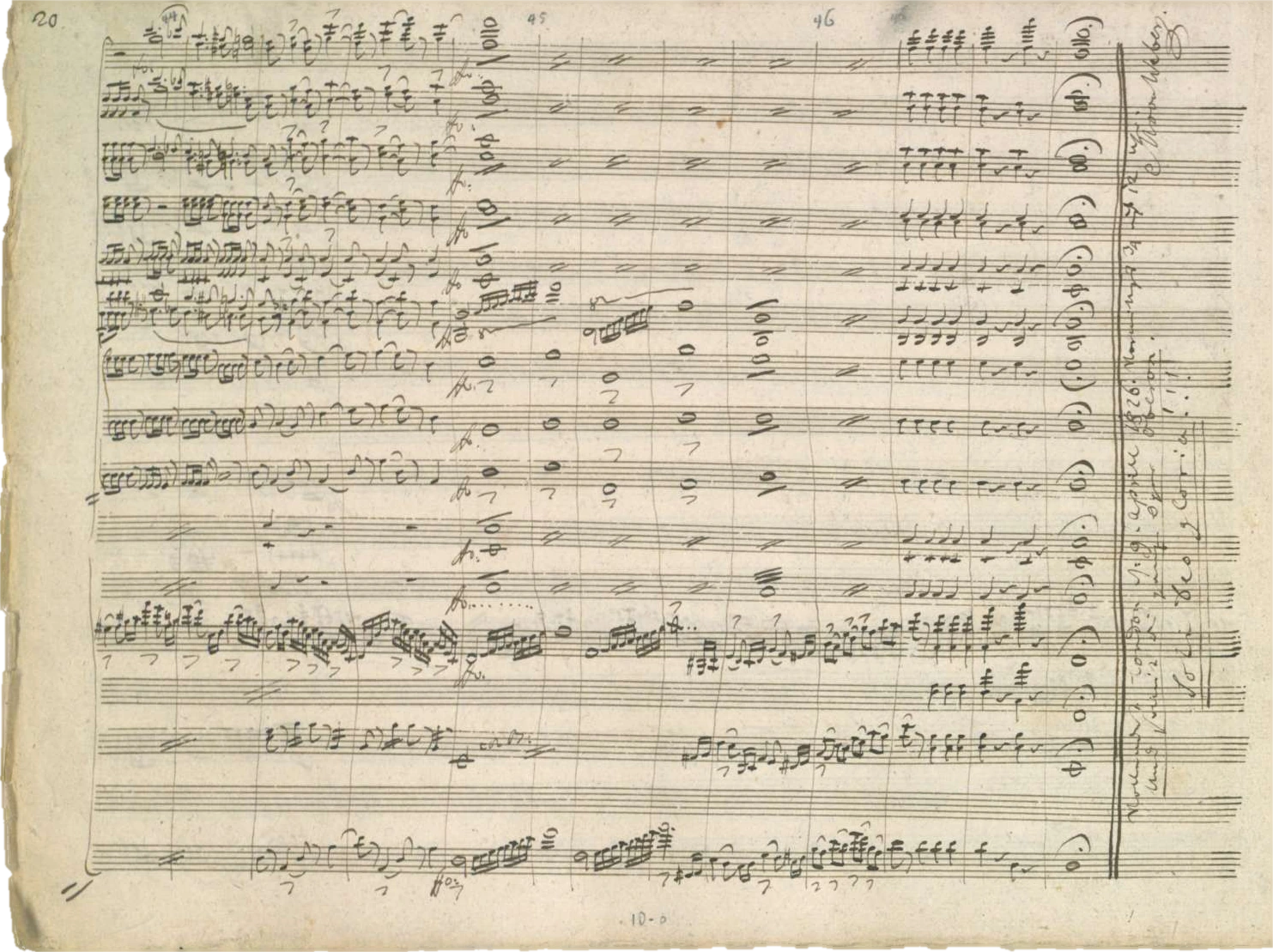
The last page of the overture in Weber’s own score, now in the National Library of Russia. The inscription is written sideways after the final bar.
Vollendet London d. 9. April 1826. Vormittags ¾ auf 12 Uhr. C M v Weber. und somit die ganze Oper Oberon. Soli Deo Gloria!!!
He wrote on the overture: “Finished April 9th, 1826, in the morning at a quarter till 12, and with it the whole opera, Soli Deo Gloria.” Within two months of the opening, he passed away. So, in a way, this is kind of our last look into Weber’s musical mind.
The overture was, for me, a real challenge to understand, and I ended up listening to the entire opera. I think Weber really condensed all the larger emotional and dramatic moments of the opera in order and then put them into an overture.
I wonder if at some point he wasn’t just a bit frustrated with how windy the libretto had been. “Fine, if this libretto is going to take me all over the place, I’m gonna compact it down into the bare essentials.” As if he was writing his own musical libretto over again.
WMUK radio, 2008